Renae Cinanni | Clinical Nutritionist | Perth WA & Online Australia wide

GI Map Stool Test
The GI Map is a comprehensive stool analysis that investigates your gut microbiome, pathogens, digestive function, intestinal inflammation, and gut permeability. It replaces guesswork with clinical certainty giving us a precise picture of what is driving your symptoms.
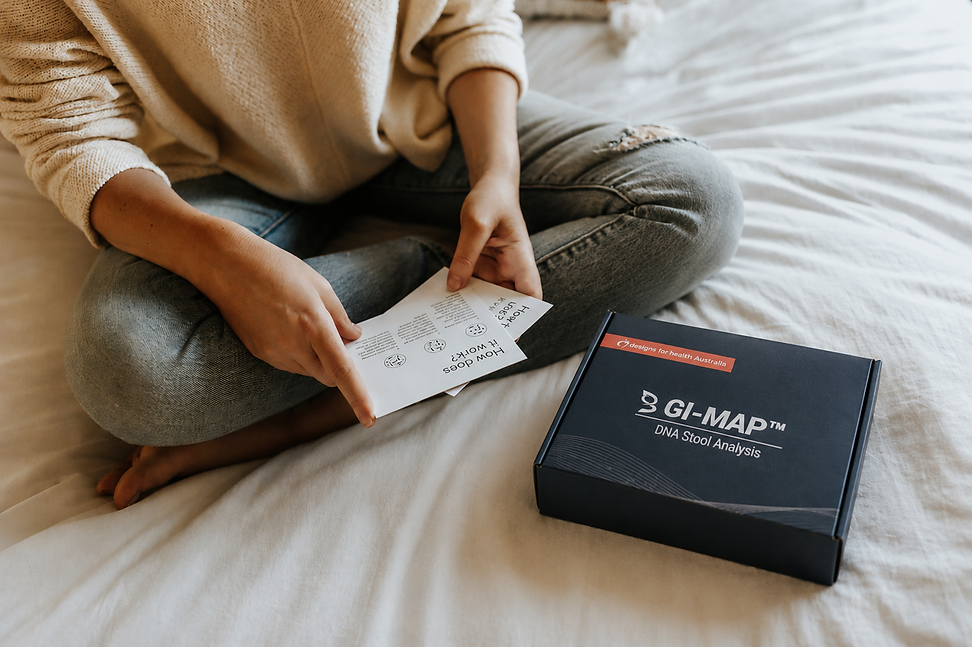
✦ At home stool collection kit
✦ Posted anywhere in Australia
✦ Results in 5 weeks
✦ Available as part of the Gut Health Program
GI MAP TEST PERTH $489
You have tried cutting foods, changing your diet, and taking probiotics. If nothing has worked, the missing piece is knowing exactly what is happening inside your gut.
The GI-MAP is a comprehensive stool test that gives us a detailed picture of what's happening in your digestive system. It looks at the balance of beneficial and harmful bacteria in your gut, checks for parasites, yeast, viruses, inflammation, digestive function, and markers that can affect the health of your gut lining and immune system.
By understanding what's happening in your gut, we can identify underlying factors that may be contributing to digestive symptoms and develop a more targeted treatment plan.
The GI-MAP can be particularly helpful for people experiencing symptoms such as bloating, excess gas, abdominal pain, constipation, diarrhoea, reflux, or ongoing digestive discomfort. It may also provide valuable insights for conditions including:
✦ Irritable bowel syndrome (IBS) and inflammatory bowel disease (IBD)
✦ Small intestinal bacterial overgrowth (SIBO)
✦ Celiac disease
✦ Gluten and other food sensitivities
✦ Intestinal permeability (leaky gut syndrome)
✦ Diverticulitis
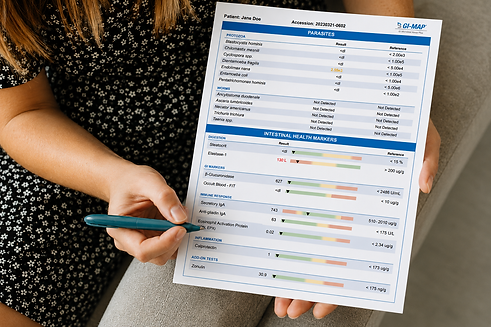

The GI map test was very helpful, and Renae ably explained exactly how the different results were impacting on my son and how to help him heal.
Merinda
Perth WA
DOES THIS SOUND LIKE YOU?
Living with gut symptoms nobody has been able to explain
You have been told your results are normal. You have tried elimination diets. The bloating after almost every meal. The unpredictable bowels that dictate what you eat and where you go. The reflux that comes back no matter what you do. The fatigue that is out of proportion to how much sleep you are getting.
Most people with chronic gut symptoms have had standard blood tests and investigations that came back clear. That does not mean nothing is wrong, it means standard testing was not designed to find the specific imbalances that are driving your experience.
The GI map test helps to uncover the root causes of:
✦ Bloating, excessive gas, or abdominal distension
✦ Reflux, heartburn, or persistent nausea
✦ Constipation, diarrhoea, or alternating between both
✦ Abdominal cramping or pain after eating
✦ Food reactions that seem unpredictable or worsening
✦ Skin conditions including eczema, psoriasis, or acne
✦ Fatigue or brain fog you cannot explain
✦ Symptoms that do not respond to diet changes alone
GUT MICROBIOME TESTING PERTH
What the GI Map Test Can Tell You About Your Gut
The GI Map provides the clinical certainty needed to build a targeted treatment plan rather than trialling approaches that may or may not address the actual problem.
Commensal bacteria
The beneficial bacteria that support digestion, nutrient absorption, gut lining health, and immune balance.
Low levels can reduce immune resilience, contribute to leaky gut and inflammation, and increase the risk of infections and other symptoms.
Opportunistic overgrowth
Bacteria that are normally kept in check but can trigger bloating, gas, gut discomfort, IBS and skin irritation when they overgrow due to stress, illness, poor digestive function or dietary factors.
Helicobacter pylori
A common gut bacteria in the stomach lining that can interfere with stomach acid production, digestion, and nutrient absorption.
It is often linked with reflux, bloating, nausea, and iron or B12 deficiency.
Inflammation and gut permeability
Markers such as calprotectin and zonulin help identify intestinal inflammation and disruption of the gut lining, which may contribute to pain, urgency, food sensitivities, and immune activation.
Immune balance
Secretory IgA reflects how well your gut immune system is functioning.
Low or high levels can affect tolerance to foods, infections, and overall gut resilience
Digestive funcion and liver detox support
Pancreatic enzyme output and digestive function,
beta-glucuronidase influences liver detoxification and hormone metabolism. Imbalances here can affect digestion, hormone clearance, and gut symptoms.
Food sensitivities
Markers such as antigliadin IgA and eosinophil activation protein can indicate immune responses to foods, particularly gluten sensitivity and inflammatory reactions in the gut.
Candida
Yeast overgrowth such as Candida can contribute to bloating, sugar cravings, fatigue, and recurrent gut or immune symptoms when balance is disrupted.
Parasites
Worms and parasites can interfere with digestion, nutrient absorption, and bowel habits (diarrhoea), sometimes without obvious travel history or acute illness.
Want to learn more about the GI map and how it can
identify the root cause of your gut symptoms?
GUT HEALTH NUTRITIONIST PERTH
Maria
"Through the GI map comprehensive testing, Renae was able to identify the underlying issues contributing to my health concerns and I have experienced a significant improvement in my overall health. "
PRICING
GI Map options
The GI Map test kit is available for purchase with an initial consultation and cannot be purchased separately without an appointment.
GI Map Test Kit + Initial Consult
$664
Ordered at your initial consultation.
Initial consultation fee paid at time of booking.
✔ 60 minute initial consultation + GI Map Kit
✔ At-home test kit posted anywhere in Australia
✔ Results in 5 weeks
✔ Results review appointment required
✔ Report of findings tailored to your health
✔ Nutrition, lifestyle and supplement plan included
Supplements are an additional cost.
Private health rebates apply for consultation fees only.
Kids Biome Gut Program
$899
All-inclusive 12 week program. Save $232
✔ 60 min initial consultation included
✔ Baby biome or Paediatric biome kit included depending on your child's age ($489)
✔ Results review appointment
✔ 3x follow-up consultations (30 mins)
✔ Personalised GI Map results report of findings
✔ Nutrition, lifestyle and supplement plan included
Best for children under 16 years of age
(and from 0 - 3yrs old)
SAVE $232
(Usually $1131 booked separately)
Terms & Conditions apply. Please read before purchasing
Gut Health Reset Program
$999
All-inclusive 12 week program.
✔ 60 min initial consultation included
✔ GI Map test kit included ($489)
✔ Results review appointment
✔ 3x follow-up consultations (45 mins)
✔ Personalised GI Map results report of findings
✔ Nutrition, lifestyle and supplement plan included
Best for adults over 16 years of age
SAVE $230
(Usually $1229 booked separately)
Terms & Conditions apply. Please read before purchasing

How Nutrition Improves Gut Health
Nutrition plays a crucial role in supporting and maintaining gastrointestinal health.
If you have been struggling with gut symptoms for a while, you probably already know that what you eat matters, but knowing that and knowing exactly what to change are two very different things.
Your gut is at the centre of so much more than digestion. When it is not working well, it affects your energy, skin, immune system, and how you feel day to day. The good news is that gut symptoms are rarely random. They have specific drivers, and those drivers can be identified and addressed.
Working with you, we look at the full picture: what you are eating, how your body is responding to it, and what is happening beneath the surface. Where standard investigations have come back normal but you still feel bloated, gassy and have diarrhoea.
Functional testing like the GI Map gives us a precise look at your gut microbiome, intestinal inflammation levels, digestive function, and whether there are pathogens, parasites, or bacterial imbalances contributing to your symptoms. These are things that simply do not show up on routine blood tests.
From there, your plan is built entirely around your results. That might mean targeted dietary changes, specific therapeutic-dose supplements, lifestyle strategies, or a combination of all three. Nothing is guesswork and nothing is generic. Every recommendation has a reason grounded in your individual findings.
The goal is not just to manage your symptoms. It is to understand what is causing them and give your gut what it actually needs to heal.